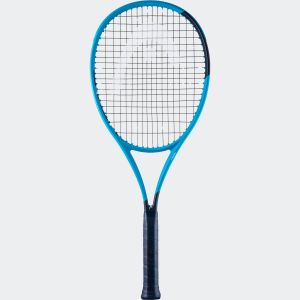
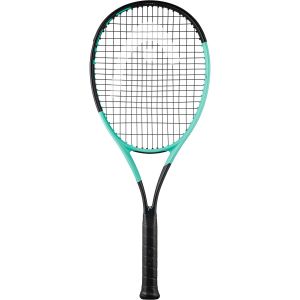
Strings are one of the most important components of a tennis racket, as they directly affect power, control, spin, and feel.
A string bed that has lost its tension has also lost its elasticity and can increase the risk of injury.
To choose the right string, you should mainly consider three factors:
The material of the string
The gauge (thickness)
The string tension
String Material
Tennis strings are divided into three main categories based on their material.
- Natural Gut
Natural gut strings offer exceptional feel, elasticity, and excellent tension maintenance. They are also a great option for players with arm or joint issues. Today, many ATP and WTA players use them in hybrid setups combined with polyester strings.
However, they are more expensive and sensitive to extreme conditions such as high humidity or temperature.
- Synthetic Gut
Synthetic strings are the most popular choice in tennis and cover the needs of most players.
There are several types:
- Polyester / Co-polyester
The #1 choice among pro tour players.
They offer high levels of control, excellent durability, and strong spin potential. Polyester strings allow players to maintain precise control over their shots while generating heavy spin that significantly affects ball trajectory and angles during rallies.
Due to their stiffness, they are not recommended for beginners or players with arm issues (e.g. tennis elbow).
- Nylon
A balanced option between power, control, and durability. Affordable and suitable for most players.
- Multifilament
Provide excellent feel and greater comfort, as they absorb more vibration. A great choice if you want a softer playing experience. One of the best options for players with tennis elbow.
- Textured / Shaped Strings
Feature a special surface that increases friction with the ball, helping generate more spin on your shots.
- Hybrid Strings
A hybrid setup means using two different types of strings in the same racket.
In a racket, there are:
The main strings (vertical)
The cross strings (horizontal)
In a hybrid setup, you use one type of string for the mains and a different one for the crosses, combining different characteristics.
For example:
Polyester strings in the mains for more control and spin
Multifilament strings in the crosses for more comfort
This way you can improve:
Feel
Durability
Control or spin
*Keep in mind that the main strings have a greater impact on the overall feel of the string bed.
String Gauge (Thickness)
String gauge affects feel, spin, and durability.
Thinner Strings:
Better feel
More spin potential
More power
Break more easily
Thicker Strings:
More durable
Last longer
Less feel
The most common gauge for most players is 1.25 mm.
String Tension
The tension at which your racket is strung affects both power and control.
Lower Tension:
More power
More comfort and arm-friendliness
Higher Tension:
More control
More consistent response
It’s recommended to string your racket within the tension range suggested by the manufacturer, which is usually printed on the frame.
You can start in the middle of that range and adjust up or down by 1–2 kg until you find what suits your game best.
This racket is unstrung, if you like to have it strung please choose a string from the list above
Description
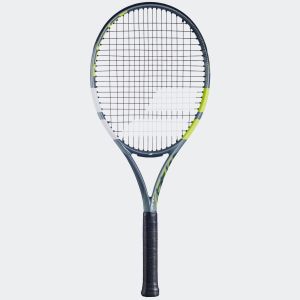
The Babolat Evoke Tour racket is ideal for beginners seeking easy power, control, comfort, stability and maneuverability in a light and forgiving frame overall. With a 105 in² head, 275 g weight, 330 mm balance and 16x19 string pattern, the Evoke Tour provides an easy-to-handle and versatile setup for players starting tennis. The generous head size and forgiving response make it easier to achieve consistent contact, while its slightly higher weight compared with the Evoke Team provides additional power. Combining good control with excellent power and easy handling, it is a practical choice for developing confidence and enjoying the game. The racket comes factory strung.

 Български